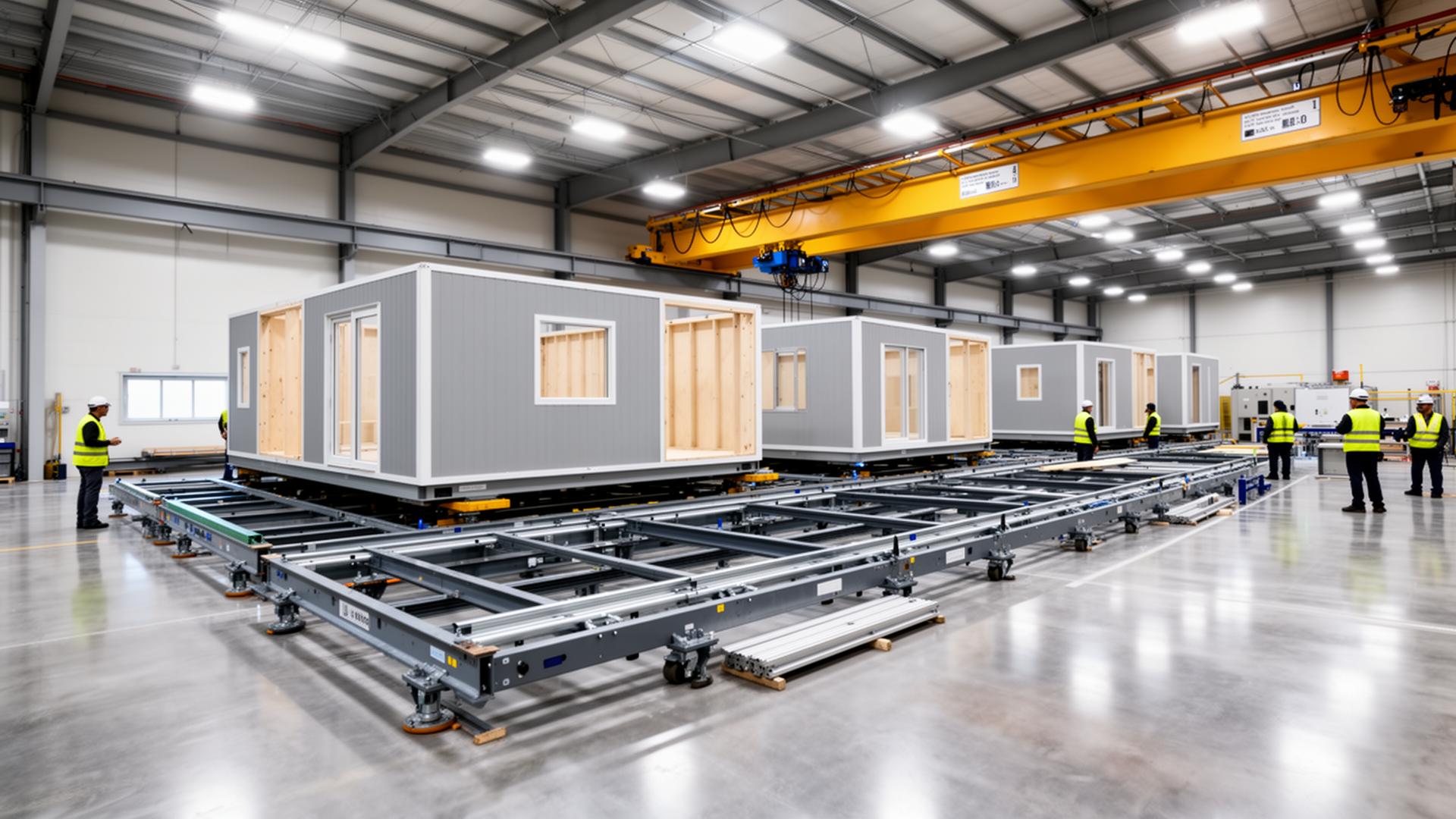
Pod Assembly Floor
Rolling steel jigs, overhead gantry crane, polished slab. The line builds 1B / 2B / 3B pod modules in parallel.
A captive 15,000 sq ft modular plant in or near Polk County, Florida — co-located with the flagship community to eliminate freight, lead time, and supply-chain risk. Built first to deliver our 150 units. Built to last as a standalone manufacturing business.
Modular factories typically serve dozens of clients. Ours serves one — until the flagship is built.
Captive production fixes blended cost at $163K–$229K per unit — insulated from contractor markups and labor scarcity.
Year 1–3.5 capacity is reserved exclusively for the 150 Polk units. No external orders compete with the flagship build.
By Year 4 the factory becomes its own profit center: custom dome kits and B2B ADUs adding ~$1.7M/yr to corporate NOI.
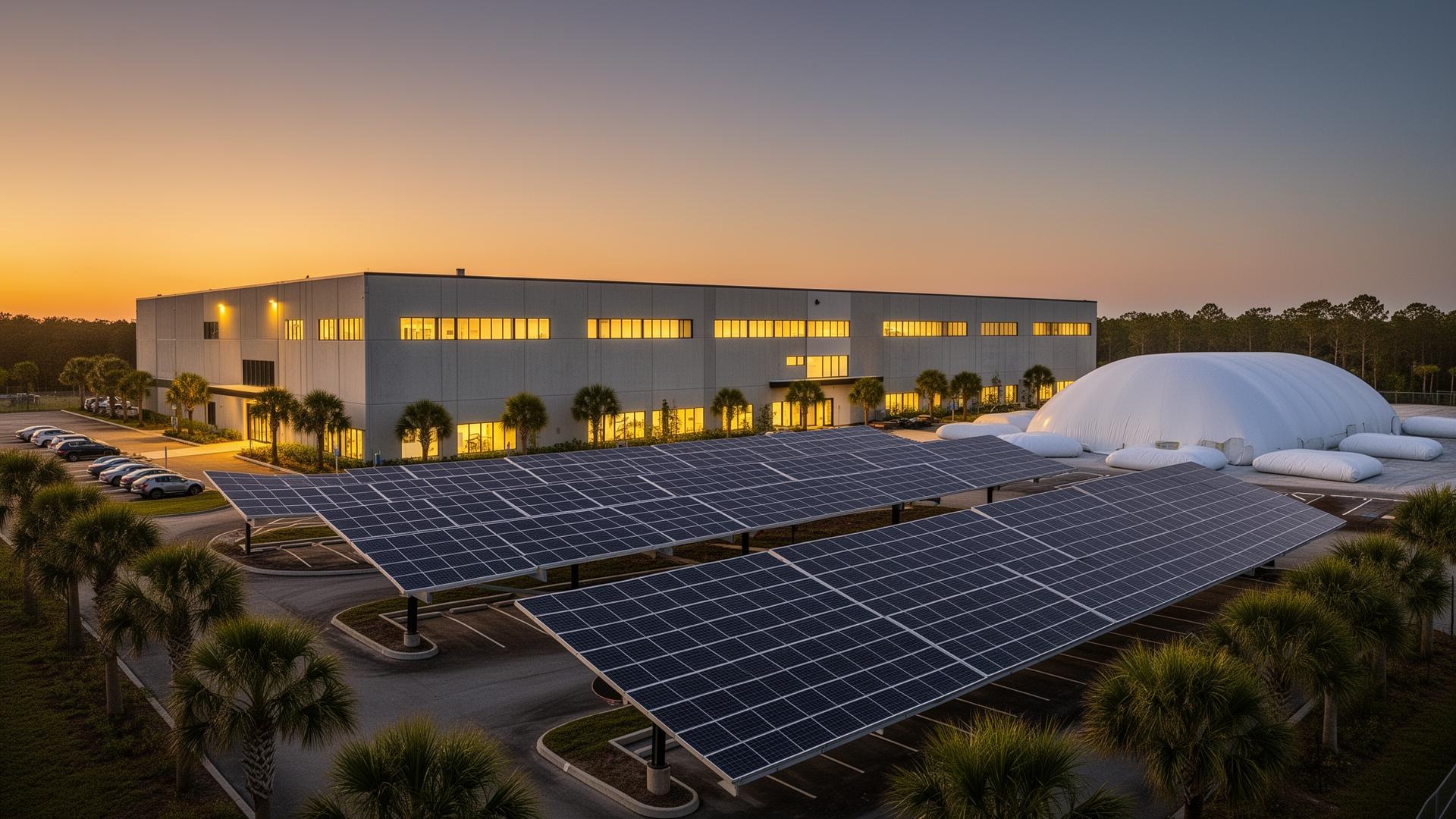
Renderings of the plant at full tool-up. The Polk County site is chosen to co-locate within trucking distance of the flagship.
Rolling steel jigs, overhead gantry crane, polished slab. The line builds 1B / 2B / 3B pod modules in parallel.
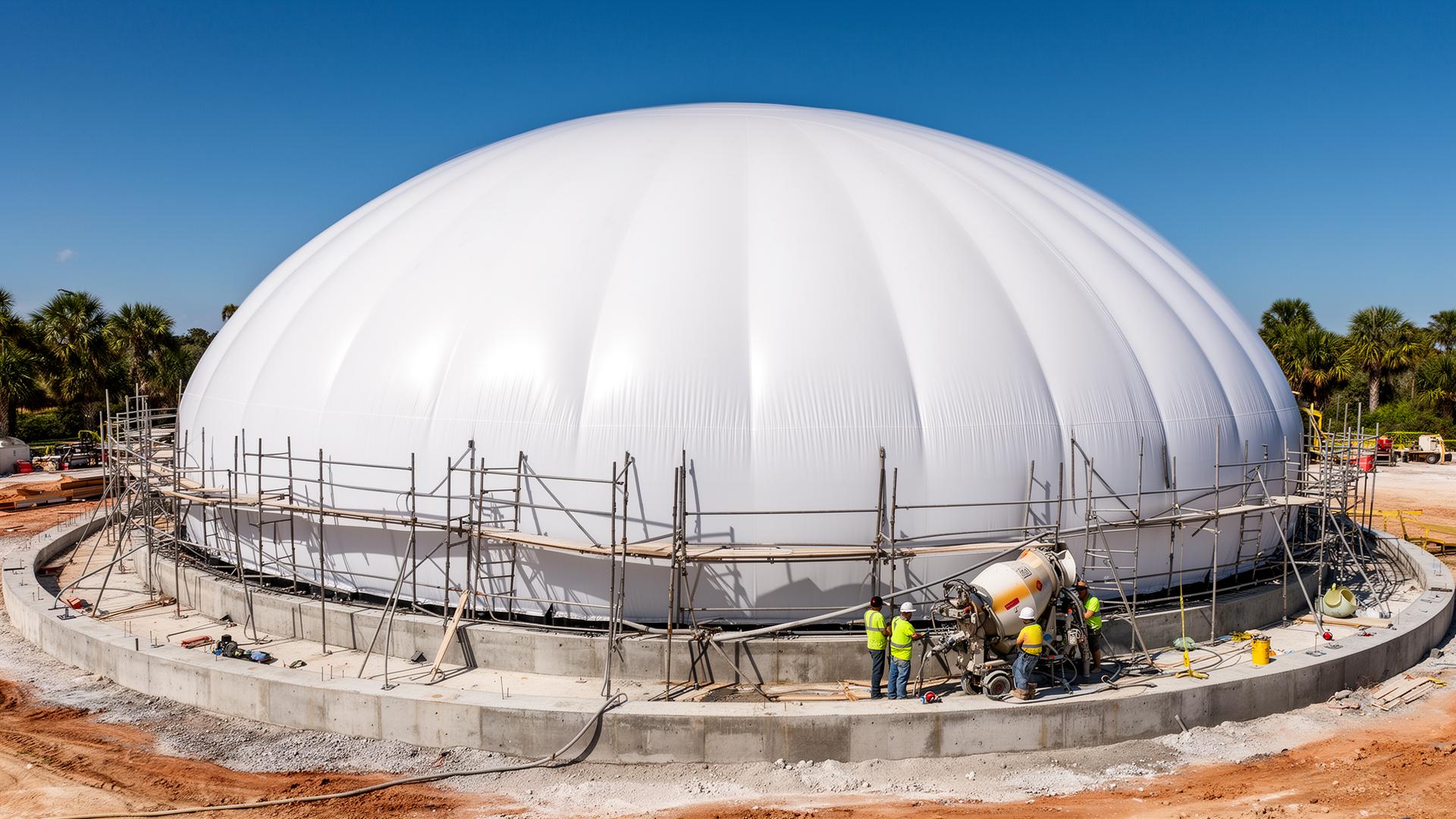
On-site airform inflation, structural rebar grid, and sprayed shotcrete shell — the monolithic dome cures in place.
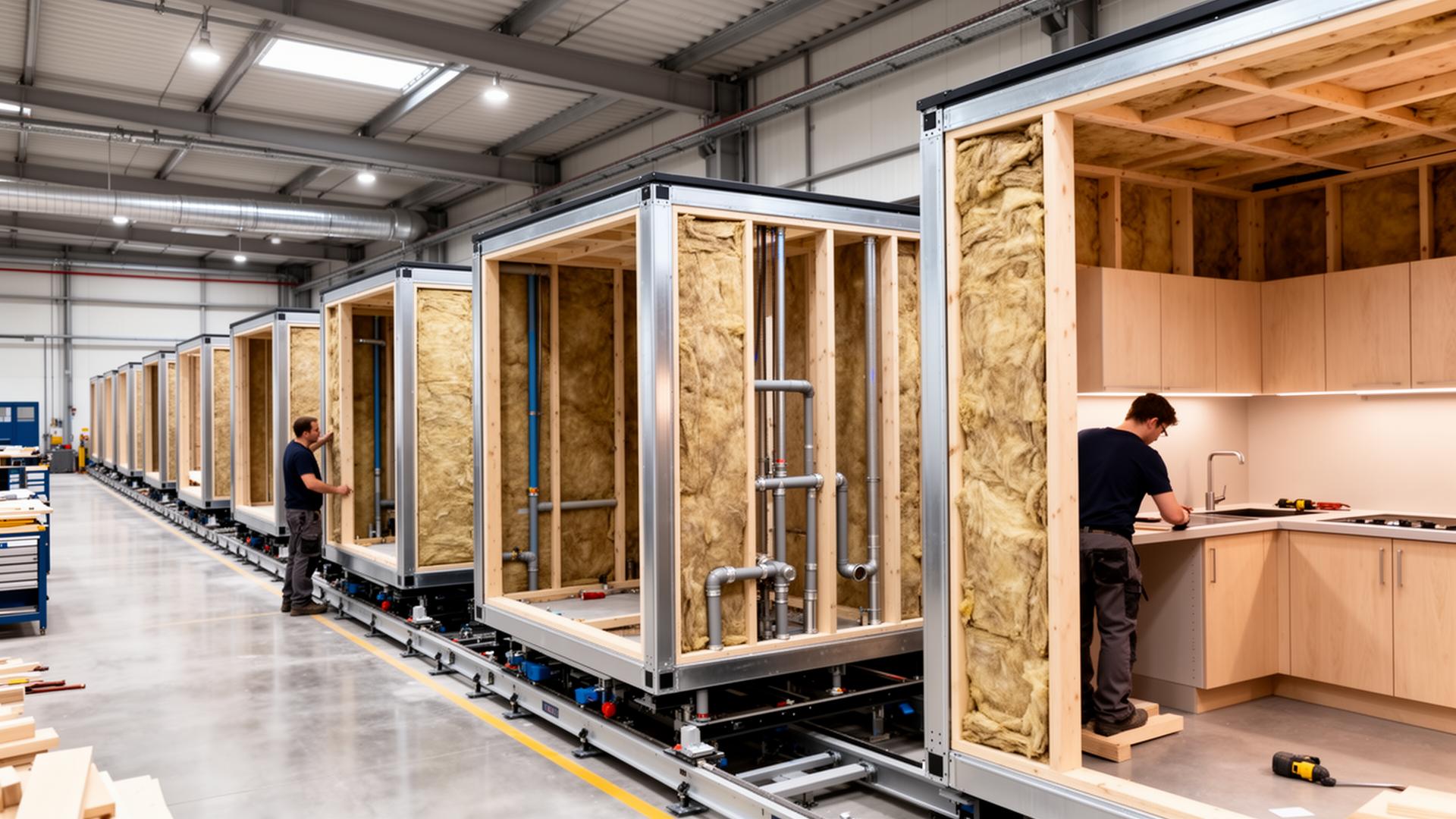
Insulation, plumbing rough-in, electrical, kitchens, and finishes — all completed before the pod ever leaves the floor.
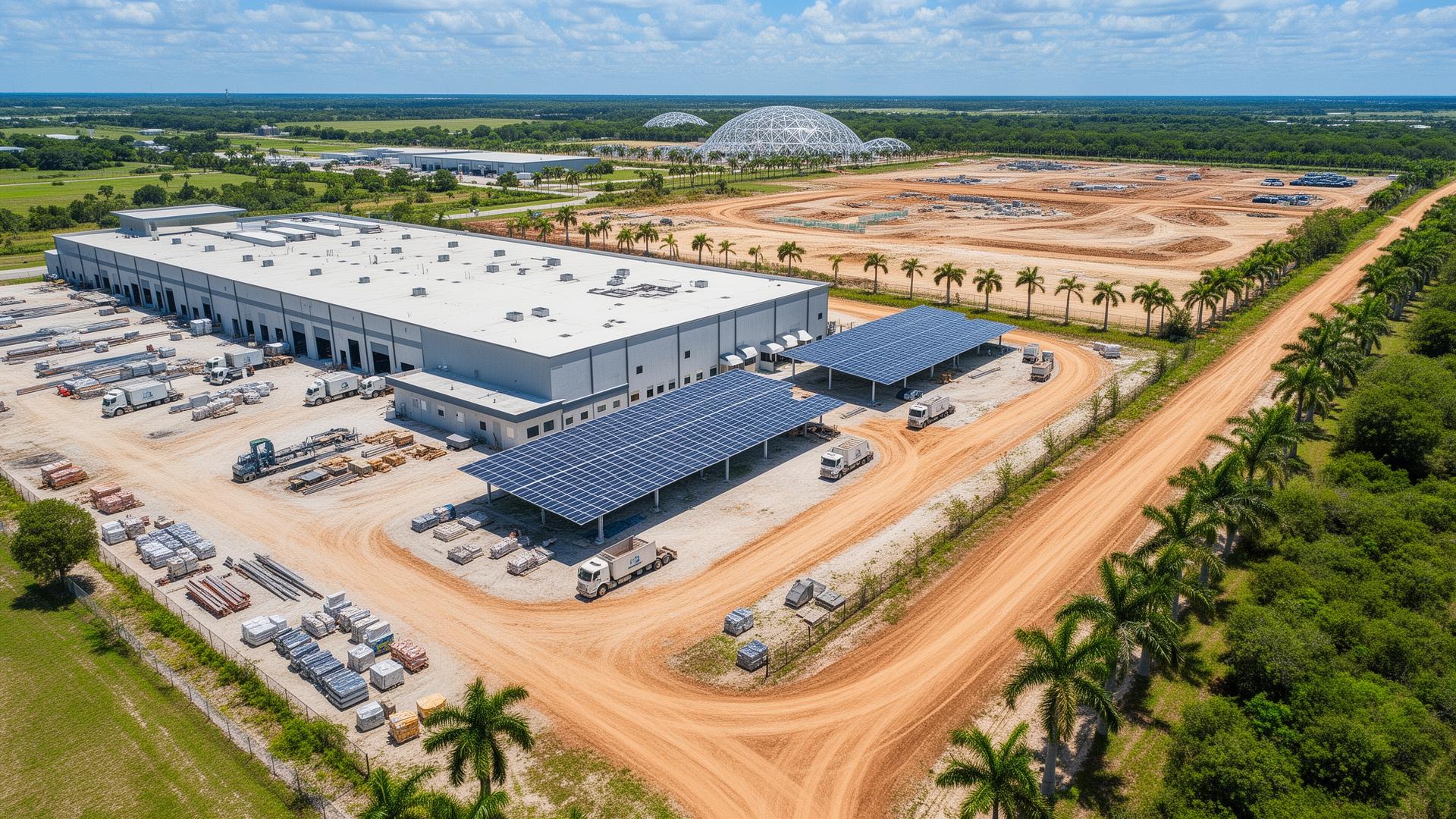
Solar carport, dome airforms, materials staging, and dock-high doors sized for 53-ft trailers to the community site next door.
Pod frames sized & welded on rolling jigs.
→On-site at the slab — circular ring beam set.
→Rebar grid + monolithic concrete spray.
→Insulation, MEP, kitchens, finishes — at factory.
→Trucked next door, craned onto slab inside shell.
Every unit moves through the same eight-step sequence — from the poured slab to the finished, storm-rated residence.
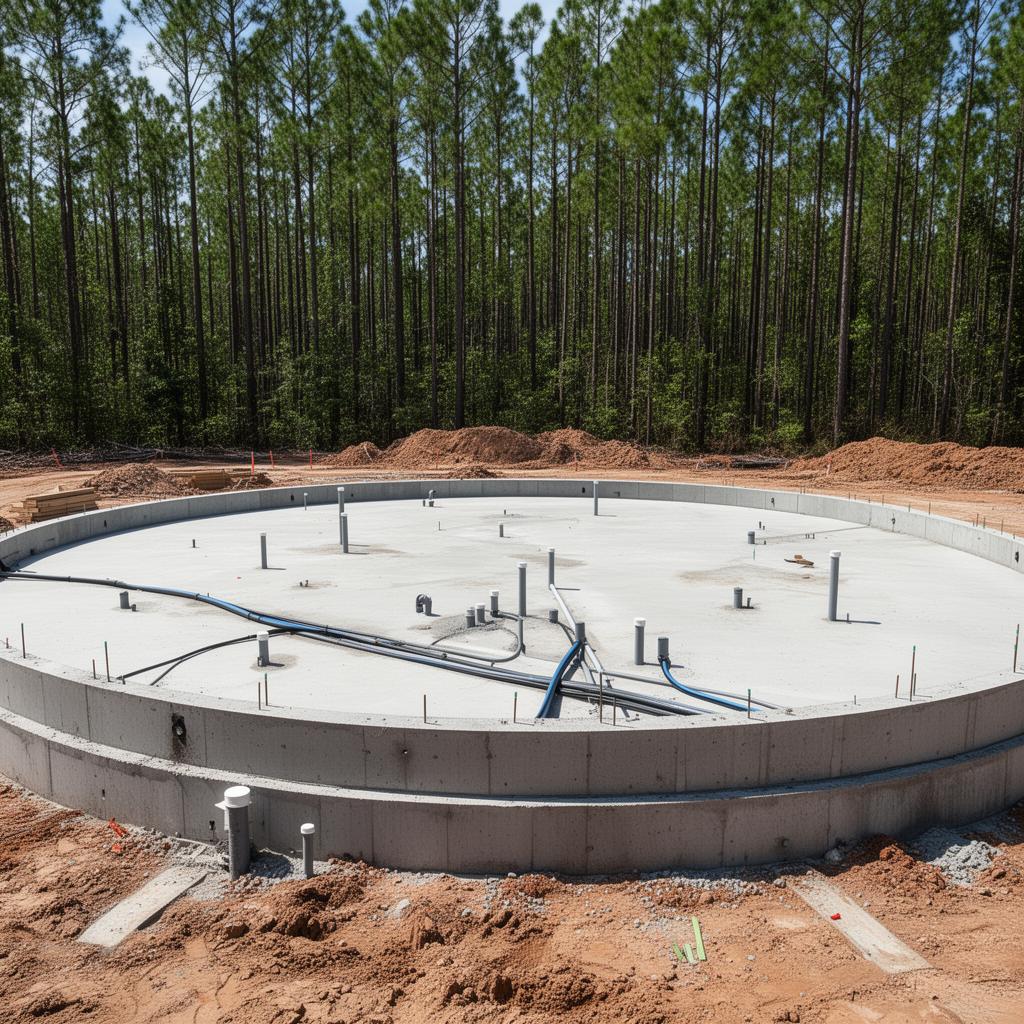
Circular slab poured with embedded plumbing and electrical.
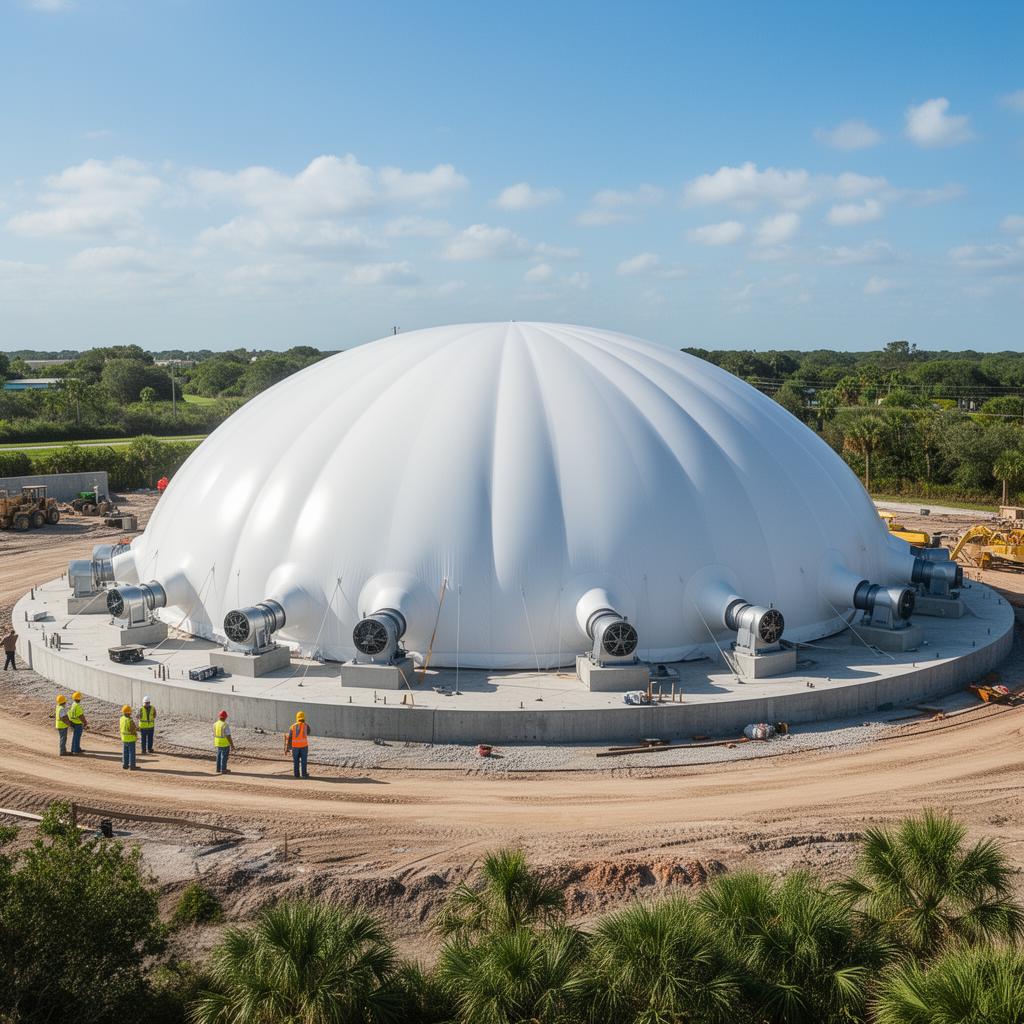
Flexible airform anchored and inflated to dome shape.
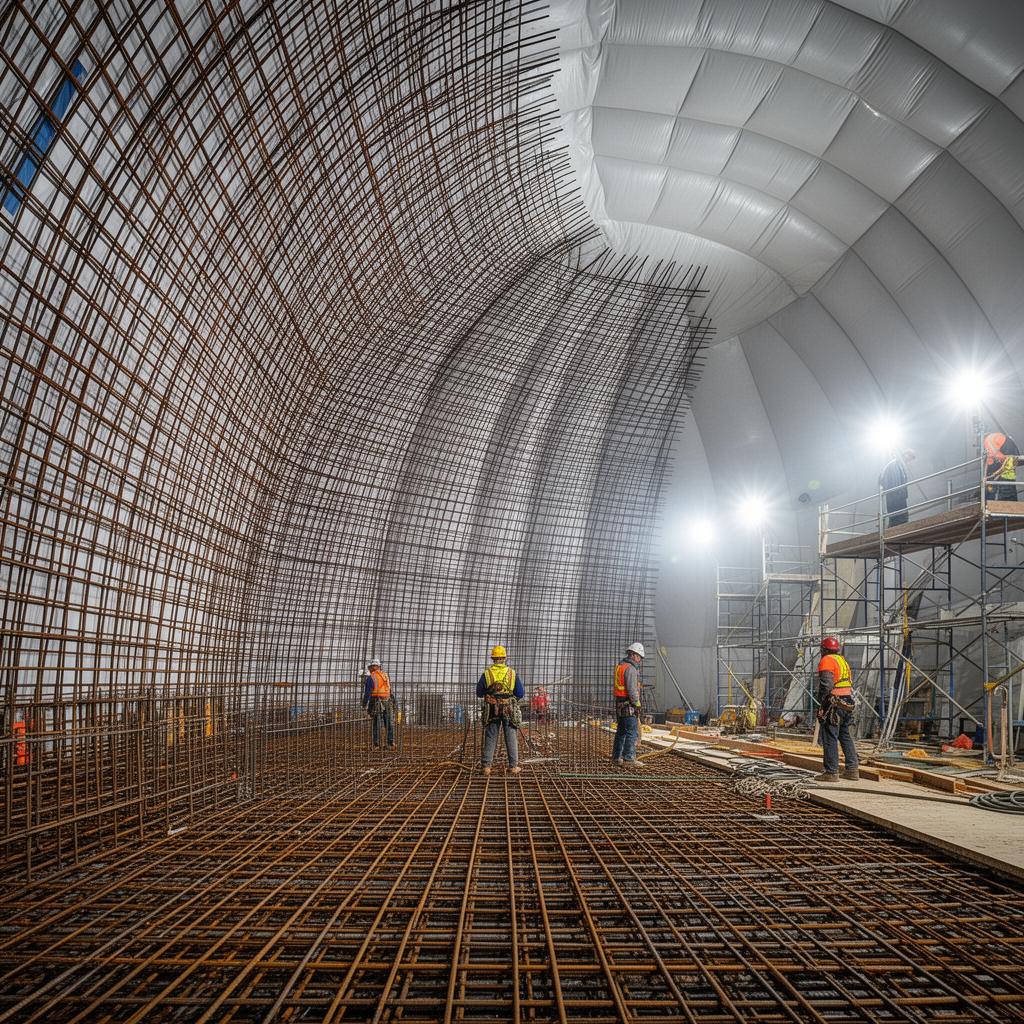
Rebar mesh tied across the inside of the airform.
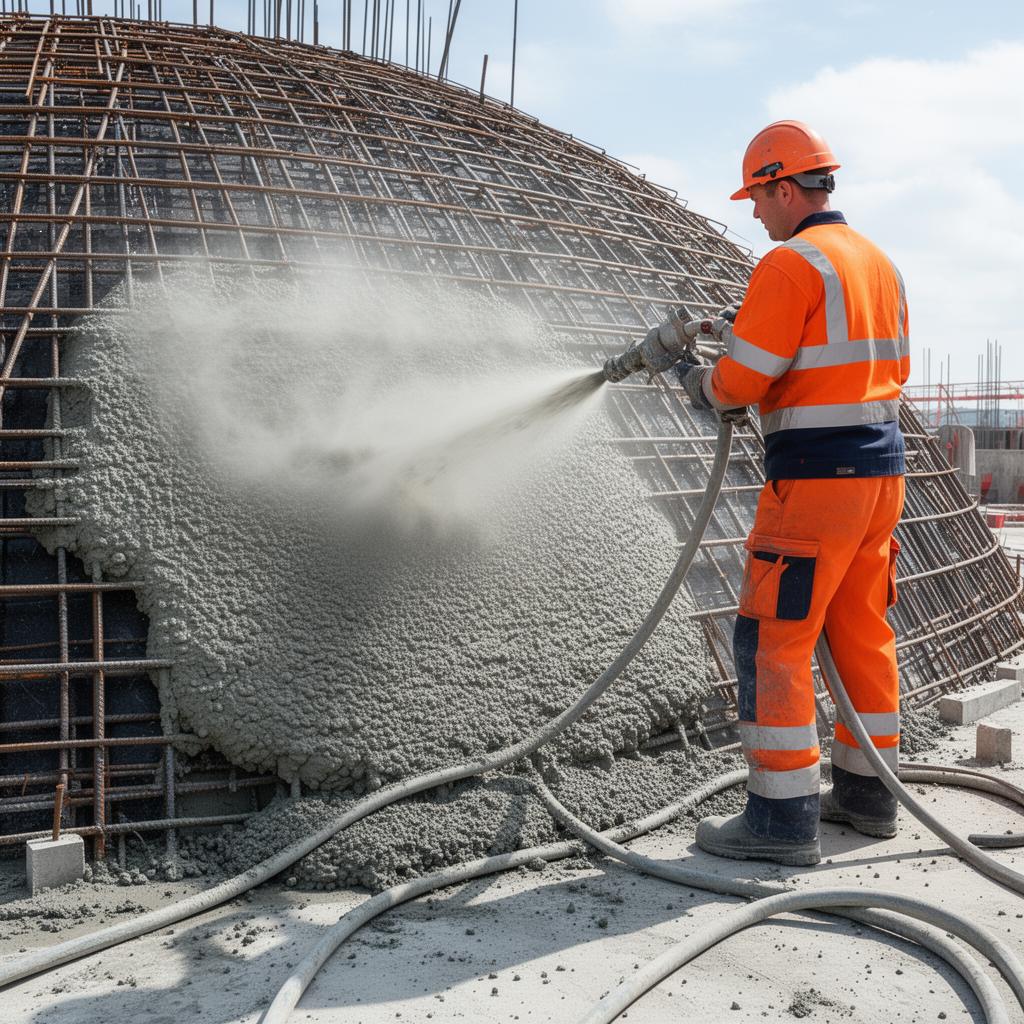
High-strength concrete sprayed in multiple passes.
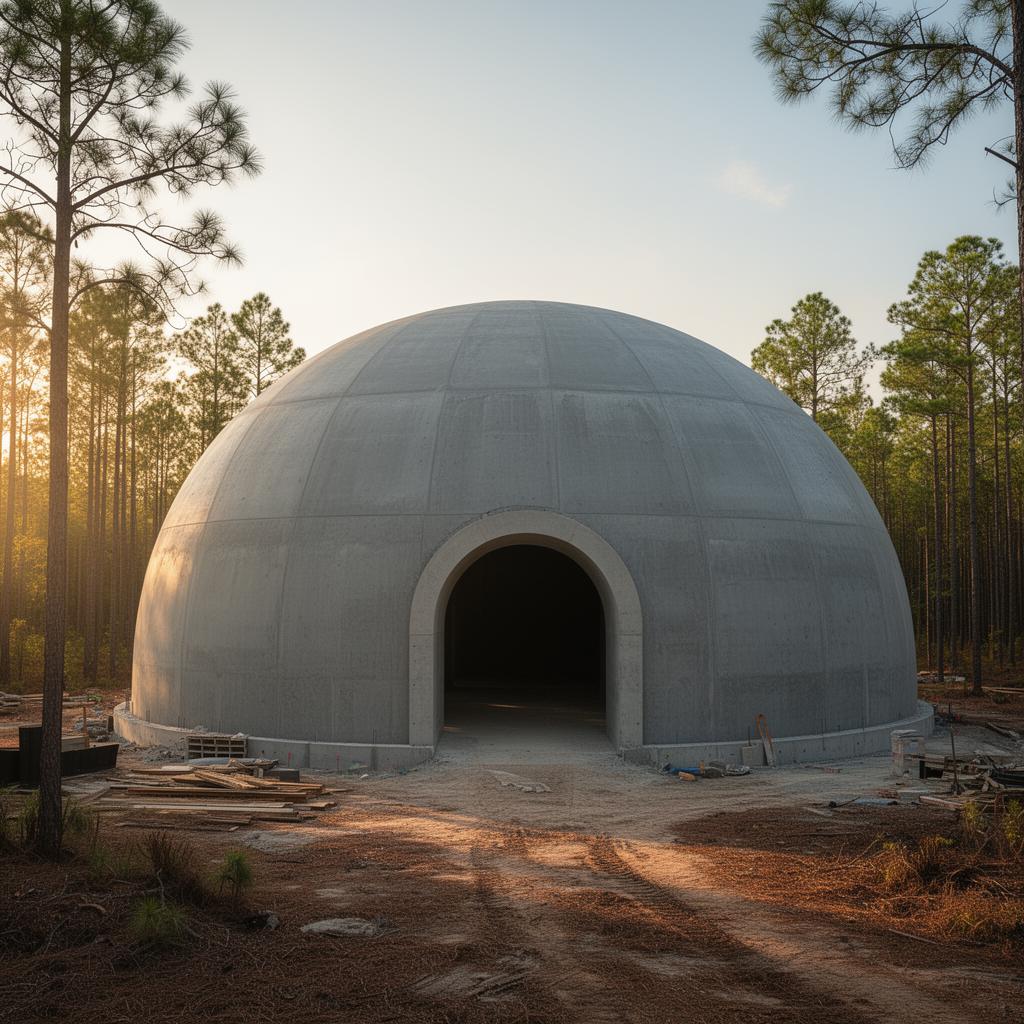
Shell cures monolithically. Airform deflates and is removed.
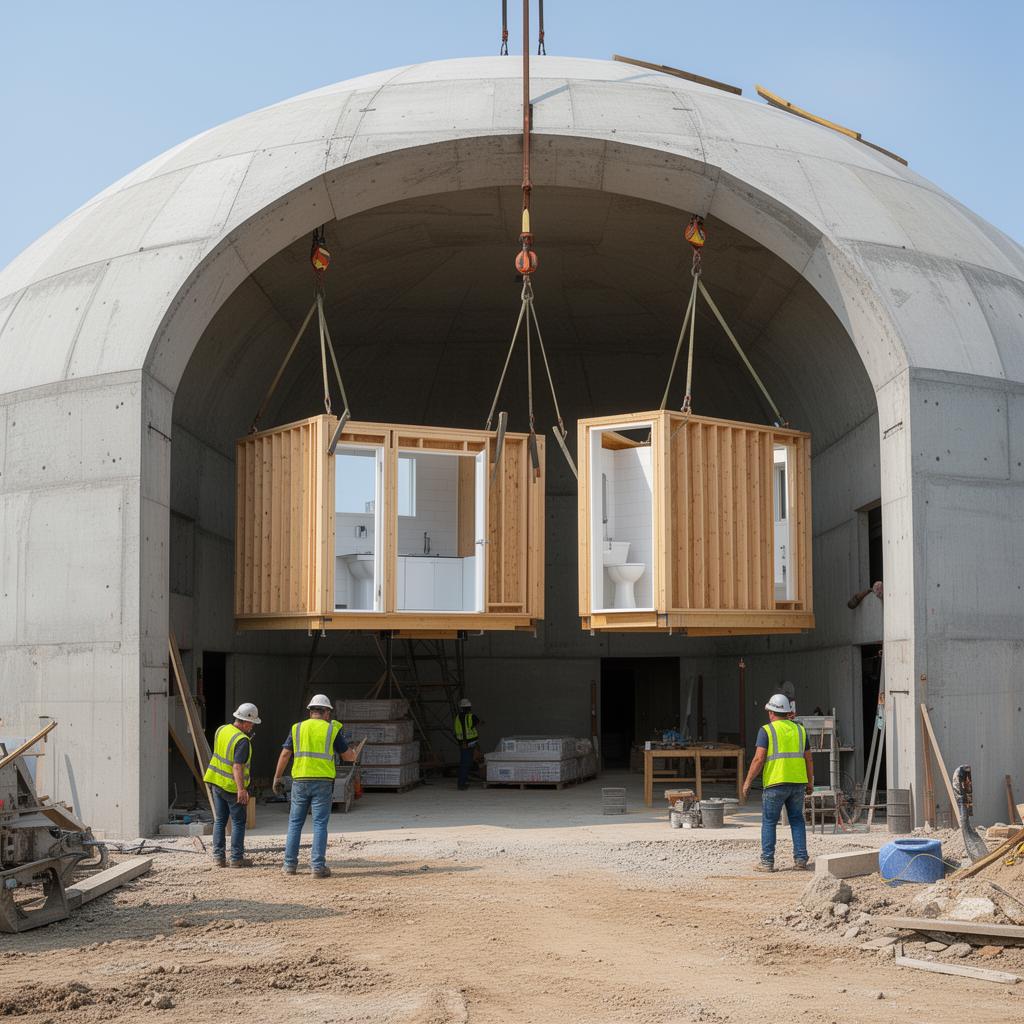
Factory-built interior pods craned in and anchored.
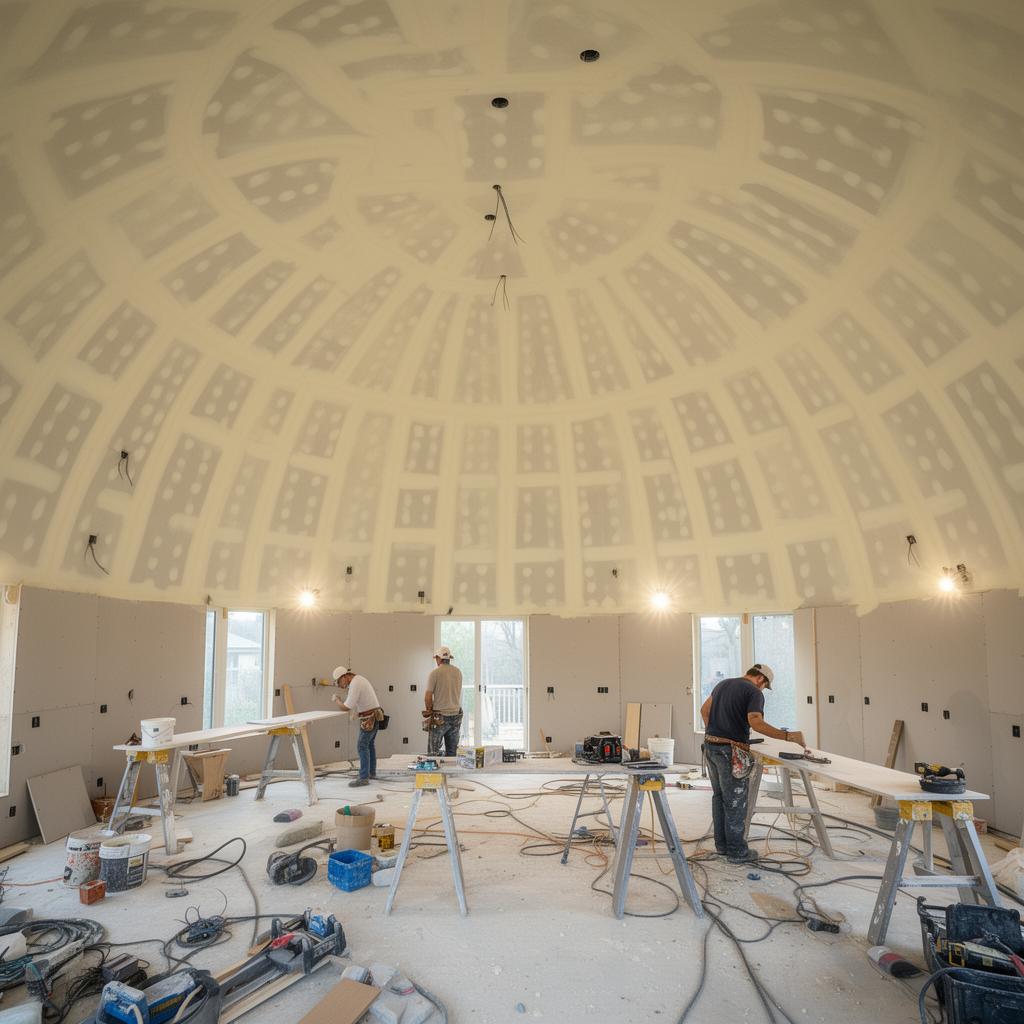
Spray-foam, drywall, fixtures and interior finishes.
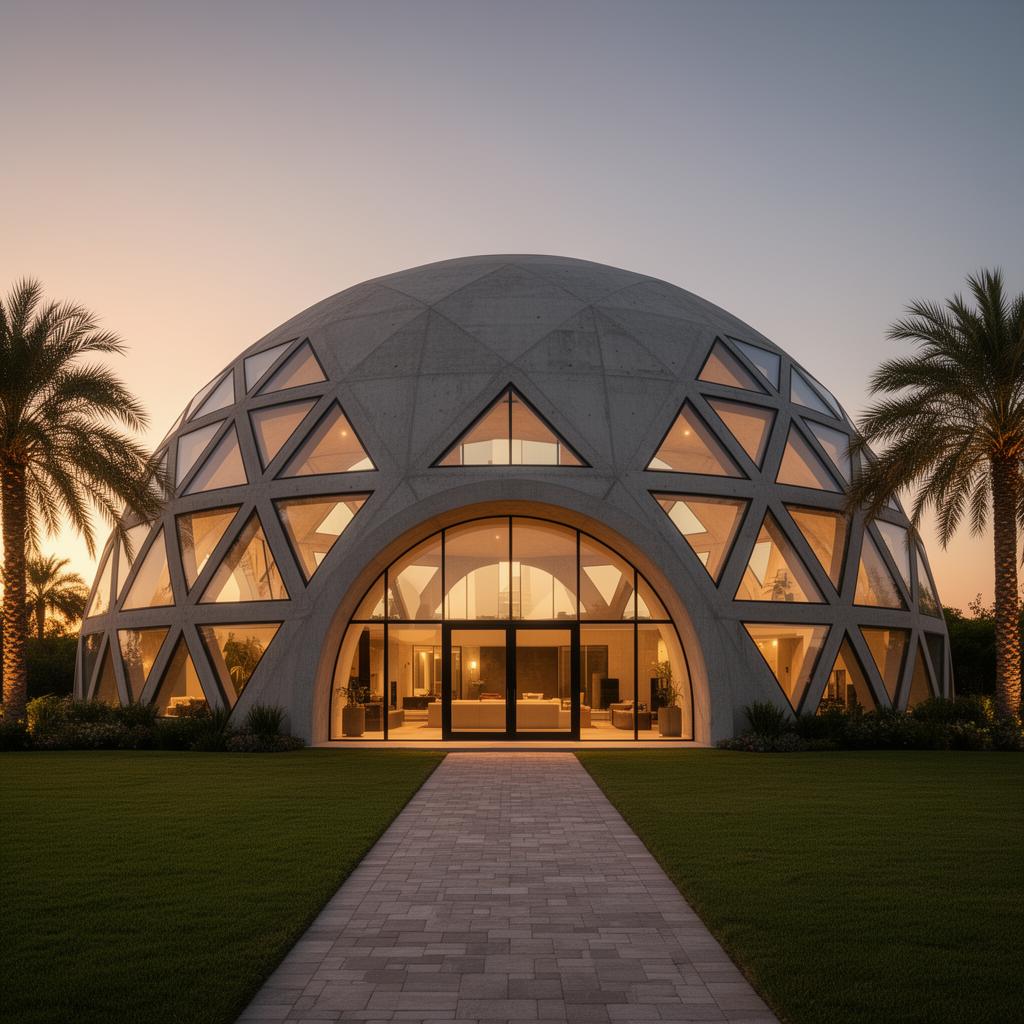
A finished, hurricane-rated residence ready for keys.
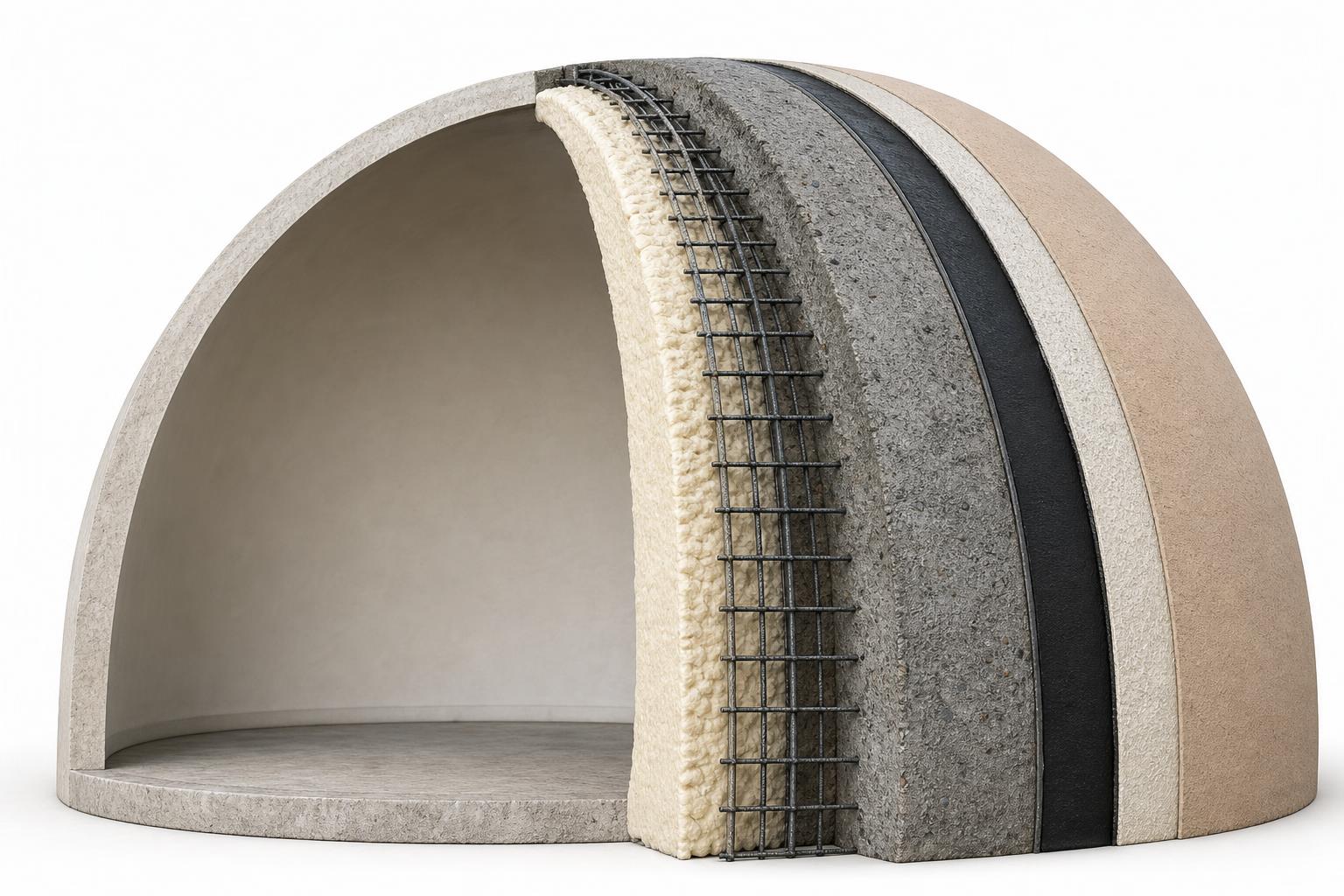
Smooth plaster or drywall — paint-ready.
Spray foam, R-20 to R-30+.
High-tensile steel mesh grid.
Shotcrete, 6–8″ thick monolithic.
Reflective thermal barrier.
Blocks moisture intrusion.
UV-resistant, flexible exterior.
100% of capacity feeds the flagship community. The factory exists to lock in cost and timeline — it is a construction tool with a corporate envelope around it.
With the community delivered, the line pivots to external revenue. Same crew. Same tooling. New buyers.
The factory is sited within trucking distance of the flagship community in the Davenport / Haines City corridor. Co-location eliminates freight cost, removes inter-state regulatory complexity, and lets the same crew shuttle between fabrication bay and on-site shotcrete bay in a single day.